

Eyes on Africa: From the Map to the Marketplace
September: A Month of Celebration and Connection
Since 2024, North Carolina has recognized September as African Diaspora Heritage Month. This proclamation provides an opportunity to bring attention to the many communities connected by African heritage while also acknowledging the diversity of their histories and experiences.
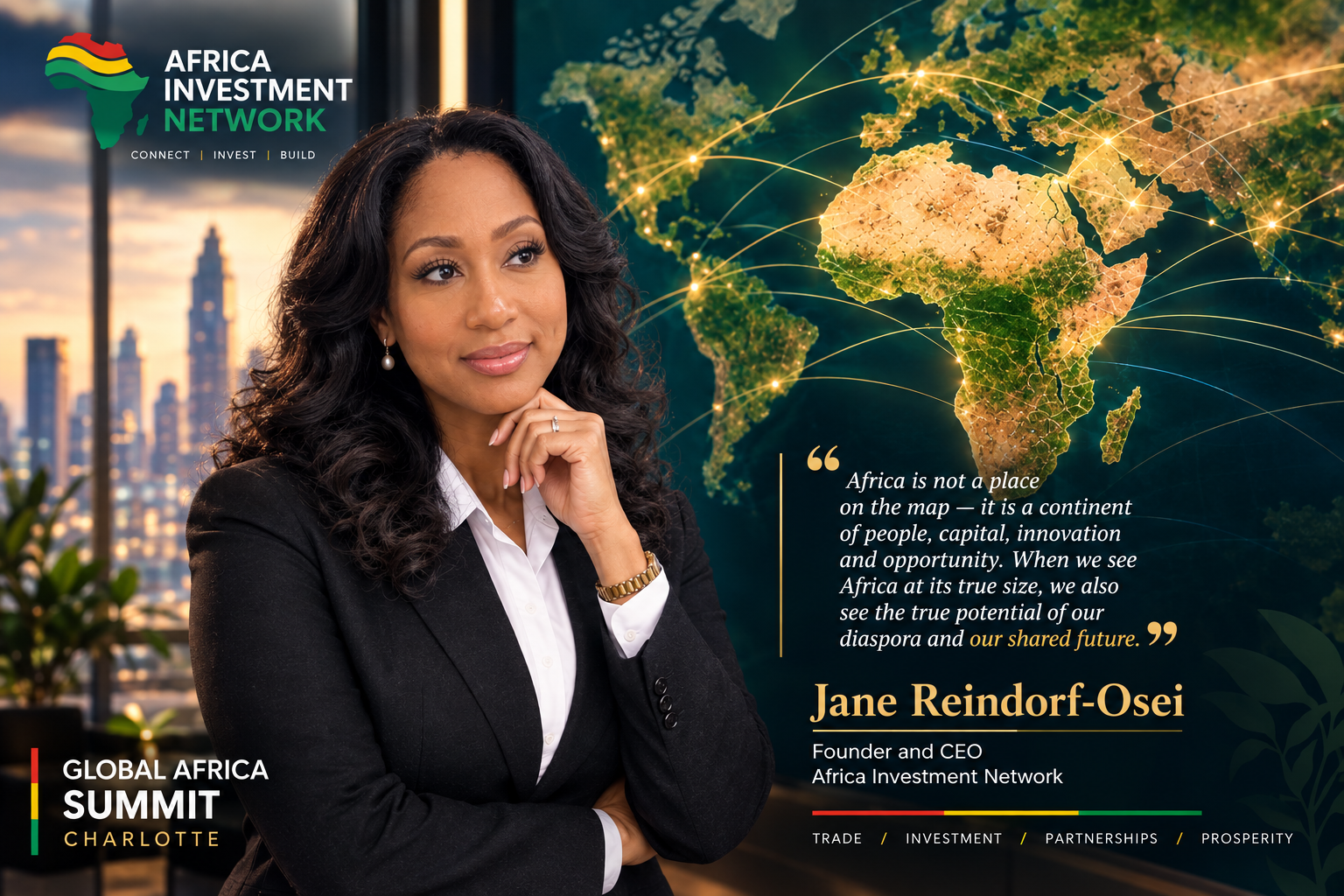
This year, that observance took on particular significance in Charlotte as the city became a gathering place for African, American and diaspora leaders through the Global Africa Summit Charlotte, organized by the Africa Investment Network (AIN) in partnership with GABA Center and Black Wall Street Charlotte.
Just days before the summit began, the world received another powerful lesson in representation. The United Nations General Assembly adopted a resolution encouraging more accurate representations of the relative size of the world’s continents. As the world was being asked to see Africa more accurately on the map, Charlotte was preparing to demonstrate what it means to see Africa more accurately in the marketplace.
Africa Is BIGGER Than We Were Taught!
For generations, many of us have looked at maps based on the Mercator projection and developed an inaccurate visual understanding of the size of the world’s continents. Africa is enormous, about 3 times the size of the United States! The current Mercator maps we are used to seeing can make Africa appear comparable in size to Greenland, which is about 14 times smaller than it really is.
The Equal Earth projection does not make Africa larger. It simply represents relative land area more accurately. That distinction matters because how we see something can influence what we believe is possible. And perhaps that is the deeper lesson for us and the African diaspora.
From Celebration to Economic Engagement
From September 8–10, the Africa Investment Network’s Global Africa Summit Charlotte brought together business leaders, investors, policymakers, entrepreneurs, corporations, universities, diaspora professionals and cultural leaders from across Africa, North America, the Caribbean and global markets.
AIN described the gathering as a move from relationship-building toward execution—connecting local enterprise with global opportunity through markets, capital and enterprise growth. The partnership placed Charlotte entrepreneurs in the same room with investors, policymakers, CEOs, economic-development leaders and representatives connected to African markets.
The summit created opportunities for participants to explore sectors including technology and AI, finance, manufacturing, real estate, infrastructure, energy, agriculture, education and workforce development. It also featured Deal Room opportunities designed to connect projects with potential capital and strategic partners.
The Diaspora as a Bridge
One of the most important ideas emerging from the summit was the role of the diaspora as a bridge. A bridge connects two places without requiring either side to lose its identity. African Americans, African immigrants, Caribbean communities and other members of the global African diaspora carry different histories and experiences. But those differences can coexist with meaningful economic and cultural connections. The Global Africa Summit brought that idea into a business environment.
Charlotte became a meeting point between communities, markets and continents—creating space for conversations around trade, investment, private capital, entrepreneurship and economic collaboration.
A New Way of Seeing
Perhaps that is why the timing of the map resolution and the Global Africa Summit feels so significant. One happened at the level of global cartography. The other happened at the level of global commerce. One asked the world to reconsider how Africa is represented. The other created a space to reconsider how Africa and the diaspora participate in global economic opportunity. Both challenge an outdated picture.
The Work After the Summit
For Jane Reindorf-Osei, Founder and CEO of the Africa Investment Network, the significance of Global Africa Summit Charlotte is ultimately measured by what happens beyond the conference room. She pointed specifically to the conversations happening outside the formal program—in hallways, around tables, at exhibition booths, in Deal Rooms and through introductions—as part of what ecosystem building looks like.
Seeing Ourselves at Full Scale
This month offered a powerful reminder that representation matters. Not simply representation in photographs, headlines or cultural celebrations, but representation in the way we understand geography, history, economics, opportunity and our own place in the global community. African Diaspora Heritage Month is therefore more than a celebration of where we come from. It can also be an invitation to consider where we are going.